

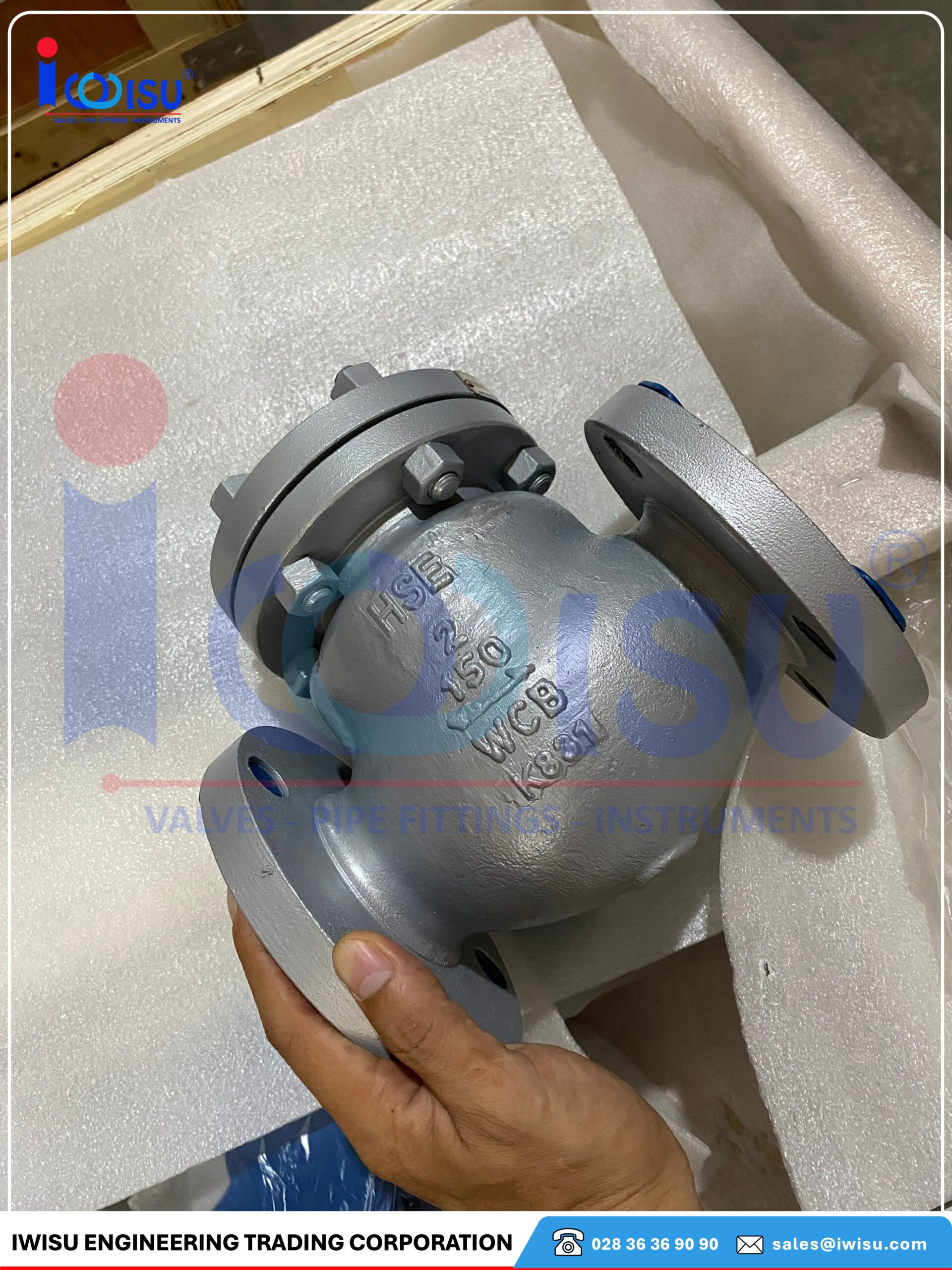
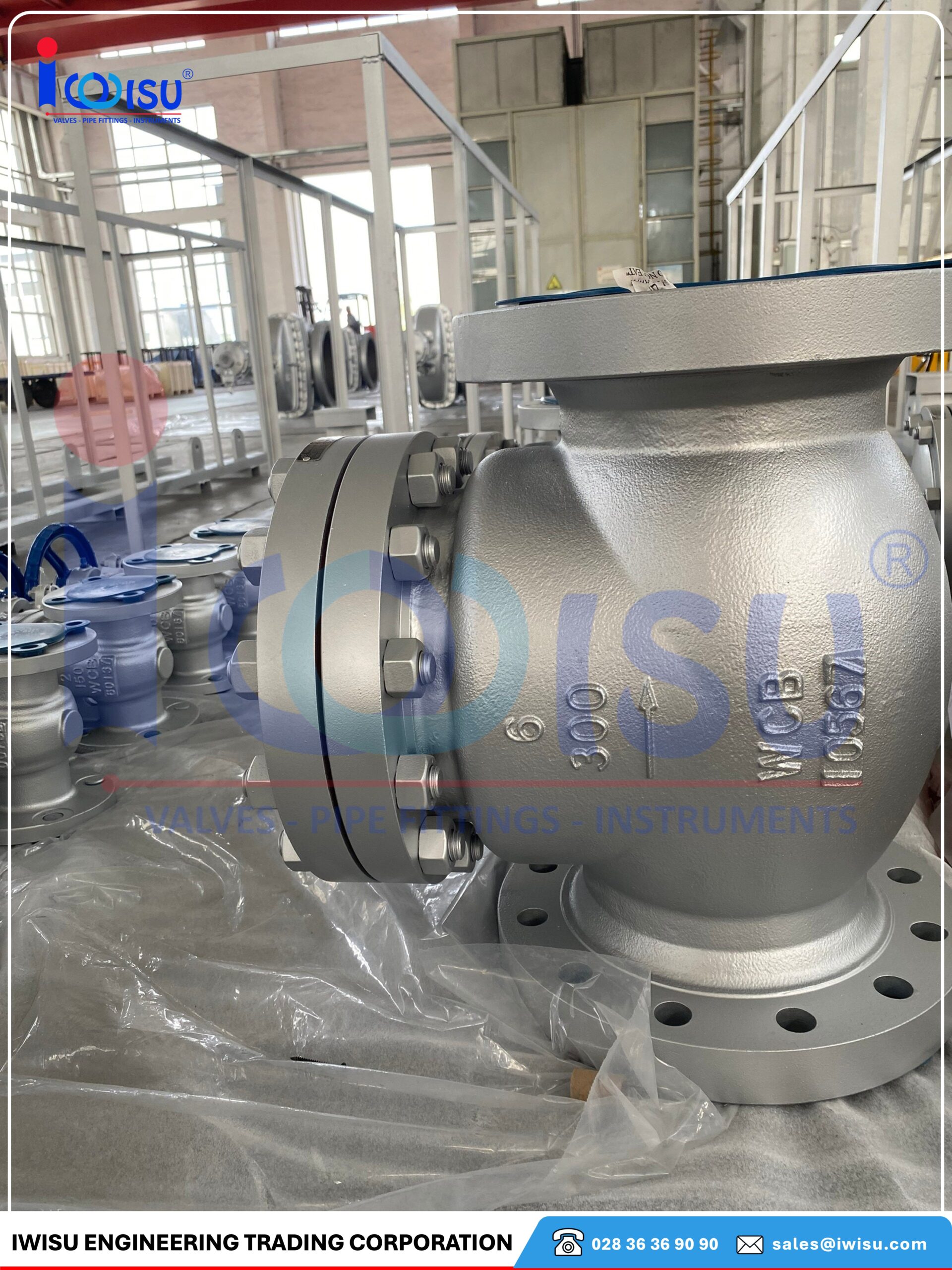
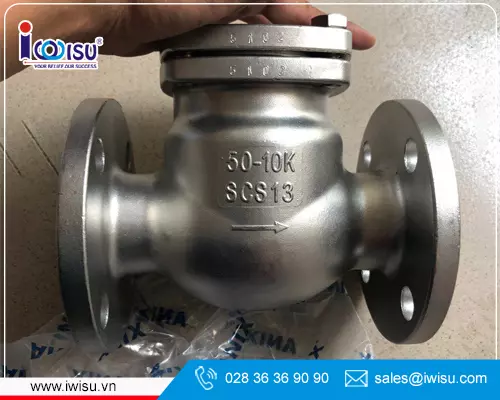
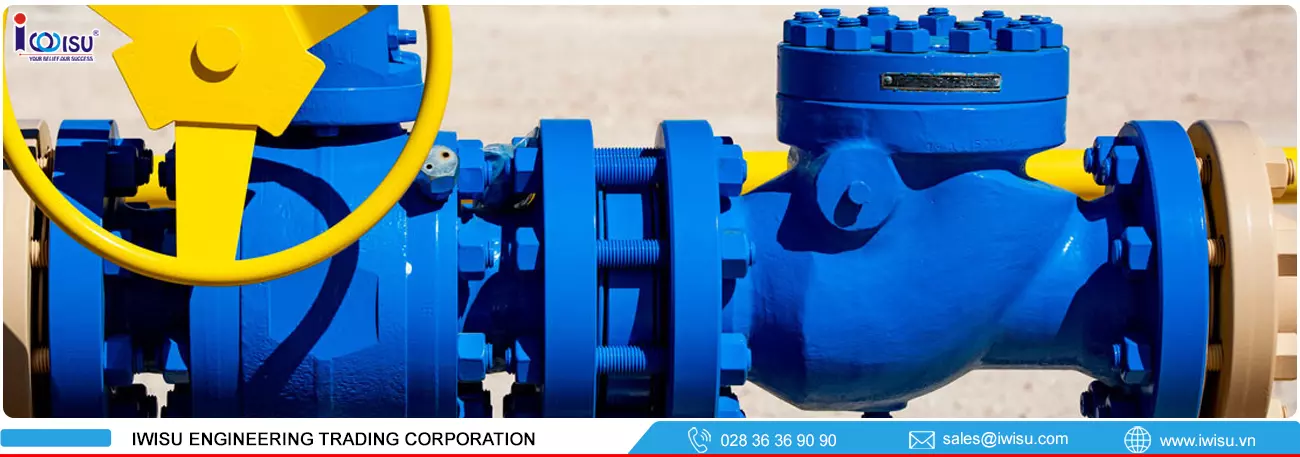
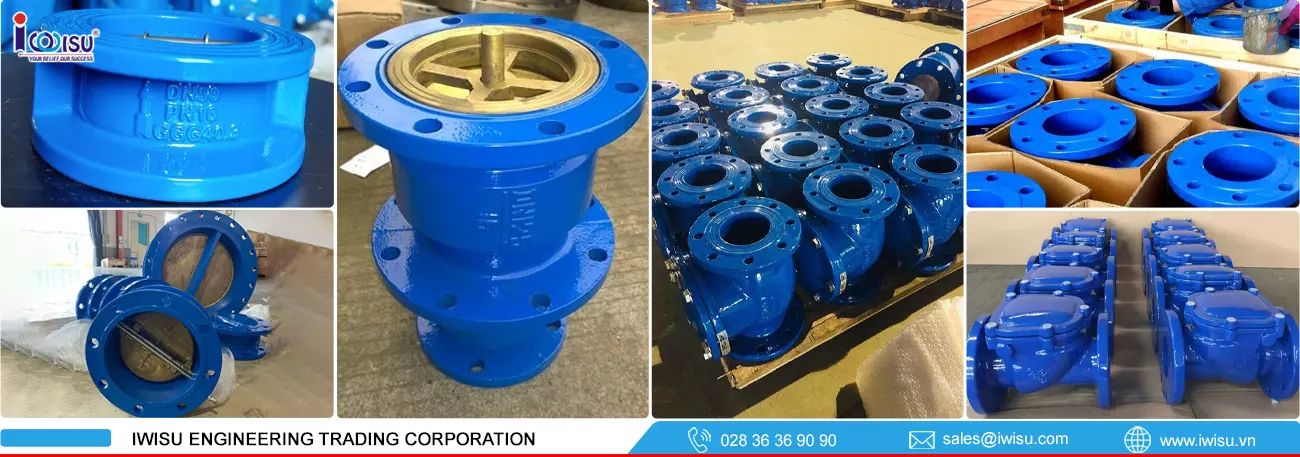

1. Introduction to Swing Check Valve WCB CLASS 150
1.1 What Is a Swing Check Valve?
A swing check valve is a non-return valve that allows fluid to flow in one direction and automatically closes when flow reverses. It operates through a hinged disc that swings open under forward flow and closes under reverse flow, preventing backflow in the pipeline.
1.2 Why It’s Important in Industrial Piping Systems
In systems transporting liquid, gas, or steam, backflow can cause pressure surges, pump damage, or contamination. Swing check valves are essential in protecting equipment such as pumps, compressors, and heat exchangers.
1.3 Basic Working Principle
The disc in the valve swings on a hinge pin. When fluid moves in the correct direction, the disc lifts off the seat allowing flow. When the flow stops or reverses, gravity and reverse pressure force the disc back onto the seat — creating a tight seal.

2. Understanding the WCB Material
2.1 What Does WCB Mean?
WCB stands for Wrought Carbon Steel, Grade B (as per ASTM A216). It’s one of the most widely used materials for valve bodies in industrial service, known for its strength, weldability, and temperature resistance.
2.2 WCB vs CF8M vs Ductile Iron – Material Comparison
| Material | Type | Temperature Limit | Corrosion Resistance | Cost |
|---|---|---|---|---|
| WCB | Carbon Steel | Up to 425°C | Moderate | Medium |
| CF8M | Stainless Steel 316 | Up to 500°C | Excellent | Higher |
| Ductile Iron | Cast Iron Alloy | Up to 300°C | Low | Low |
If your system involves steam, oil, or industrial water, WCB offers the perfect balance between cost and durability.
2.3 When to Choose WCB Body Material
Use WCB when:
-
The medium is non-corrosive (steam, oil, water).
-
The system requires mechanical strength under pressure.
-
Budget is a consideration.
3. Pressure Class 150 Explained
3.1 What Is Pressure Class Rating?
Pressure class defines the maximum working pressure the valve can handle at a specific temperature. For example, Class 150 is rated according to ASME B16.34.
3.2 Why Class 150 Is the Most Common Choice
Class 150 valves are ideal for low to medium pressure systems (up to about 19.6 bar at 38°C). It’s widely used in HVAC, water treatment, and oil pipelines due to easy availability and compatibility.
3.3 Operating Pressure and Temperature Range
At 38°C, a WCB Class 150 valve can handle about 19.6 bar (285 psi). As temperature increases, allowable pressure decreases, e.g., around 15 bar (220 psi) at 200°C.
4. Design and Construction of Swing Check Valve
4.1 Main Components
Body and Bonnet
Made of ASTM A216 WCB, they form the main pressure boundary. Bonnet is bolted or pressure-sealed to allow internal access.
Hinge and Disc Assembly
The disc is the movable part connected to the hinge arm. It swings freely and seals against the seat when closed.
Seat Ring
Usually made of Stellite or 13Cr stainless steel for wear resistance. Hard-faced seats improve sealing and durability.
4.2 Flow Direction and Installation Position
The arrow cast on the valve body shows flow direction. It must be installed horizontally or vertically (upward flow), never for downward flow.
4.3 Face-to-Face Dimensions (ASME B16.10)
For Class 150 swing check valves, the face-to-face dimension follows ASME B16.10 standard, ensuring compatibility across brands.
5. How Swing Check Valve Works
5.1 Flow in Forward Direction
When fluid enters, the pressure pushes the disc away from the seat — creating a free passage.
5.2 Backflow Prevention Mechanism
Once flow reverses, the disc quickly swings back to its seat due to gravity and pressure difference, blocking reverse flow instantly.
5.3 Common Causes of Valve Failure
-
Incorrect installation (wrong direction)
-
Worn hinge pin or seat
-
Sludge buildup causing the disc to stick
6. Applications of WCB Swing Check Valve CLASS 150
6.1 Oil & Gas Pipelines
Prevents reverse flow in crude or refined product lines.
6.2 Steam, Water, and Air Systems
Ideal for boiler feed lines, cooling water, and compressed air systems.
6.3 Chemical and Power Plants
Ensures process reliability by maintaining one-way flow and protecting rotating machinery.
7. Advantages and Limitations
7.1 Key Advantages
-
Simple design, low maintenance
-
Automatic operation (no external control)
-
Suitable for both horizontal and vertical pipelines
7.2 Common Limitations
-
Slamming noise if installed incorrectly
-
Not ideal for pulsating flow
-
Heavier than wafer-type check valves
7.3 How to Overcome Drawbacks
Use a dashpot or spring-assisted design to reduce slamming; ensure horizontal installation for smoother operation.
8. Swing check valve Installation and Maintenance Tips
8.1 Proper Installation Direction
Follow the arrow marking on the body. Installing in reverse direction can damage the disc and seat.
8.2 Periodic Inspection
Check for wear on hinge pin and seat every 6–12 months.
8.3 Replacing the Disc and Seat
During maintenance, the bonnet can be removed, allowing quick replacement without removing the entire valve from the pipeline.
9. Choosing Between Swing, Lift, and Dual Plate Check Valves
9.1 Comparison Table
| Type | Flow Direction | Application | Pros | Cons |
|---|---|---|---|---|
| Swing | Horizontal / Upward | General pipeline | Low pressure drop | Large size |
| Lift | Horizontal / Vertical | High-pressure fluids | Good sealing | Needs clean fluid |
| Dual Plate | Any | Compact systems | Lightweight | Smaller bore |
9.2 When to Choose Swing Check Valve
Select swing type for clean fluids, low pressure, and large diameter pipelines.
10. How to Read Valve Marking and Nameplate
10.1 Example: “SWING CHECK VALVE WCB CLASS 150 RF”
-
Swing Check Valve – Valve type
-
WCB – Body material
-
Class 150 – Pressure rating
-
RF – Raised Face end connection
10.2 Understanding Each Element
These markings ensure compatibility and help maintenance teams identify exact specifications.
11. Conclusion
The Swing Check Valve WCB Class 150 is one of the most reliable and cost-effective solutions for preventing backflow in industrial systems. With a robust carbon steel body and simple swinging disc design, it provides durability, easy maintenance, and compatibility with a wide range of media. Whether used in oil pipelines, steam lines, or general water systems, it remains a standard choice for engineers around the world.
FAQs About Swing Check Valve WCB Class 150
Q1. What is the main difference between a swing check valve and a lift check valve?
A swing check valve uses a hinged disc that swings open, while a lift check valve moves vertically with the flow.
Q2. Can a swing check valve be installed vertically?
Yes, but only in upward flow direction. Never install it in downward flow lines.
Q3. How do I know if my swing check valve is leaking?
Leakage can be detected through backflow, vibration, or unusual noise. Periodic pressure testing is recommended.
Q4. What is the temperature limit of WCB material?
Typically up to 425°C (800°F) depending on pressure and service conditions.
Q5. How often should I service a swing check valve?
Inspect every 6 to 12 months depending on the operating medium and environment.
Contact IWISU today for consultation and quotations on genuine imported Swing Check Valve WCB Class 150 products
This article was written by the IWISU engineering team and reviewed by Le Huy Do, a technical expert with over 10 years of hands-on experience in supporting, consulting, and installing industrial valve systems — particularly high-quality imported swing check valves, widely used in both large and small industrial projects in Vietnam. All information shared is based on practical experience, installation work, and real operation at factories.
IWISU Engineering Trading Corporation is a trusted distributor of industrial valves, flanges, and pipe fittings in Vietnam. We supply products for major projects in sectors such as oil & gas, chemical, food processing, and many other industries. IWISU takes pride in being a reliable supplier of valves and piping components for leading contractors in Vietnam such as Thaco, PetroVietnam, Acecook, and others.
We are also an authorized distributor for officially imported products from countries including Korea, China, Japan, and Europe, featuring renowned brands such as ANIX, ASCO, REGO, AUTOMA, HSE, Fluonics, SAMWOO, Lenor, BV (BVALVE), Swissfluid, and Zuercher Technik.
All products come with full Certificates of Origin (CO) and Certificates of Quality (CQ), ensuring premium quality, competitive pricing, and fast delivery. IWISU is committed to long-term cooperation and delivering sustainable value to all partners and customers across Vietnam.
For inquiries, consultation, or quotation requests, please contact us:
-
Email: sales@iwisu.com
-
Hotline: 028 36 36 90 90 – 0908 217 288
-
Website: https://iwisu.vn
Visit our website to explore a full range of industrial valves, flanges, pressure gauges, and other imported equipment at: thegioivalve thietbinhapkhau thegioimatbich